Article: Online safety
Educating Against Hate
4 min read
Read More
Children and young people may come across harmful messages online or in their community.
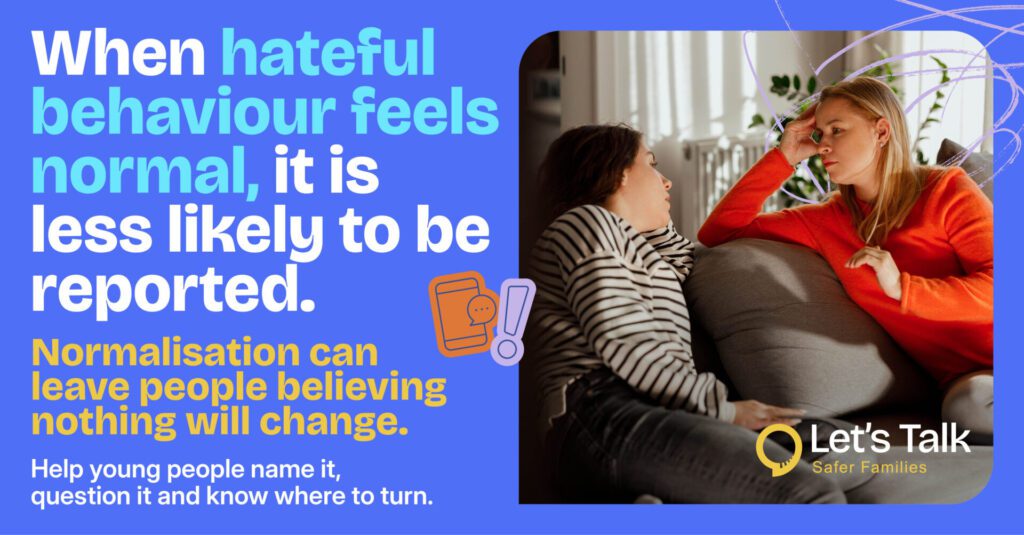
Most are simply testing boundaries or repeating what they have heard, but repeated exposure can make harmful ideas seem normal.
This section helps parents and carers understand the harmful messages, content, and influences children may come across online or in their community. It includes advice on spotting concerns and starting supportive conversations.
Extreme views are often part of growing up. Young people may test boundaries or repeat things they have heard online without fully understanding them. However, if harmful messages go unchallenged, they can make hate seem normal and, in rare cases, lead to radicalisation.
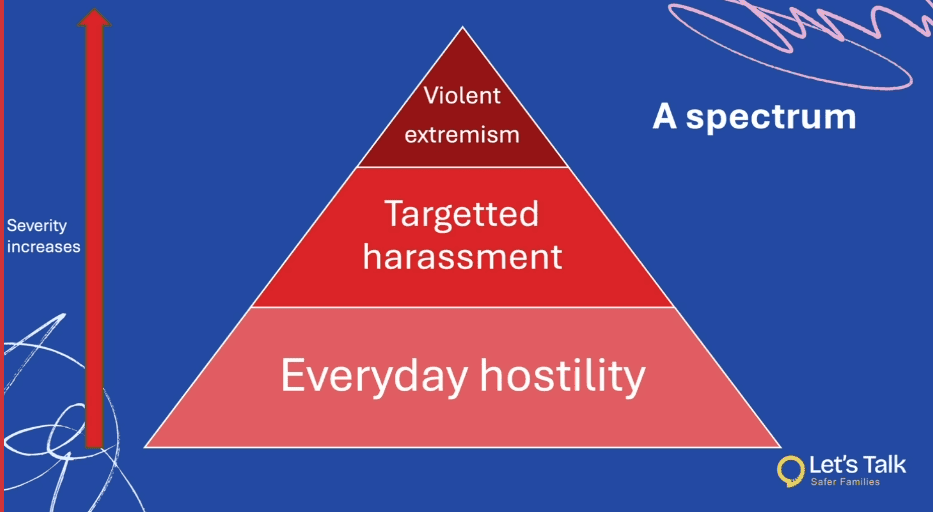
You can think of harmful views like a triangle.
At the bottom of the triangle are things that may seem small, such as teasing, “banter”, stereotypes, or jokes that put down certain groups of people.
In the middle are stronger beliefs and behaviours, such as sharing hateful messages, supporting discrimination, or encouraging others to exclude or target people because of who they are.
At the top of the triangle are serious actions, including threats, hate crimes, and violence motivated by hatred towards a person or group.
The higher up the triangle you go, the fewer people are involved. Most people who hear or repeat harmful jokes will never commit violence. However, the top of the triangle represents a real risk.
That’s why it is important to challenge harmful attitudes early, before they have a chance to grow into more serious beliefs or behaviours.
Image taken from session in partnership with Go Getta CIC.
Watch our recent webinar – Educating Against Hate, where Sav from Go Getta CIC talks through how to spot signs of harm and gives tips to intervene effectively.
Article: Online safety
4 min read