
Article: Bullying
Educating Against Hate;
A parents quick guide to protecting your child from Online Hate and Extremism
Credit: The Teenage Relationship Project by HOPE/Go-Getta.
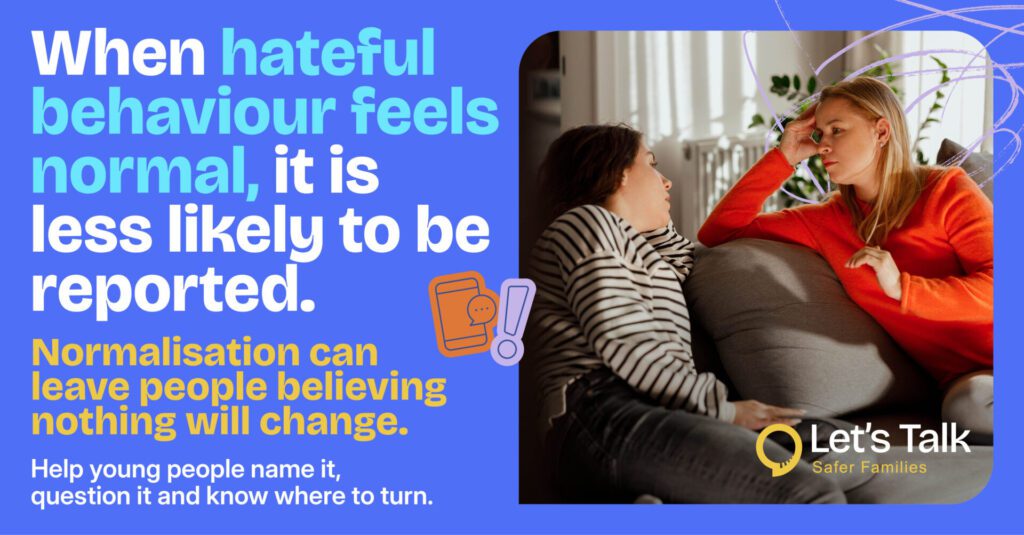
Hate and harmful ideas often find young people rather than the other way round.
According to Ofcom research, 73% of 11-17 year olds had said they had seen or heard some form of hateful content online in a four week period. BBC and Vodafone research found that 69% of boys aged 11-14 had been served content negative about women and girls without searching for it.
You don’t need to be a tech expert to help. Connection, curiosity and critical thinking go a long way.
How it reaches young people
Hateful content rarely starts with obvious extremist messages. It often begins with jokes, memes, videos, or posts that seem harmless. Social media algorithms then suggest similar content, which can slowly lead young people towards more extreme views. This usually happens over time, not overnight.
Why it appeals
Teenagers want to feel accepted and understood. Some online groups offer a sense of belonging and simple answers to difficult feelings such as loneliness, anger, or feeling left out.
Strong connections with family, friends, sports, clubs, and hobbies can help protect young people from harmful influences.
What UK law says
Sharing hateful or abusive content online can have serious consequences. While not all harmful content is illegal, it can still hurt people and leave a digital footprint. It is important for young people to understand that online actions can affect real lives.
Edgy language or a developing pattern?
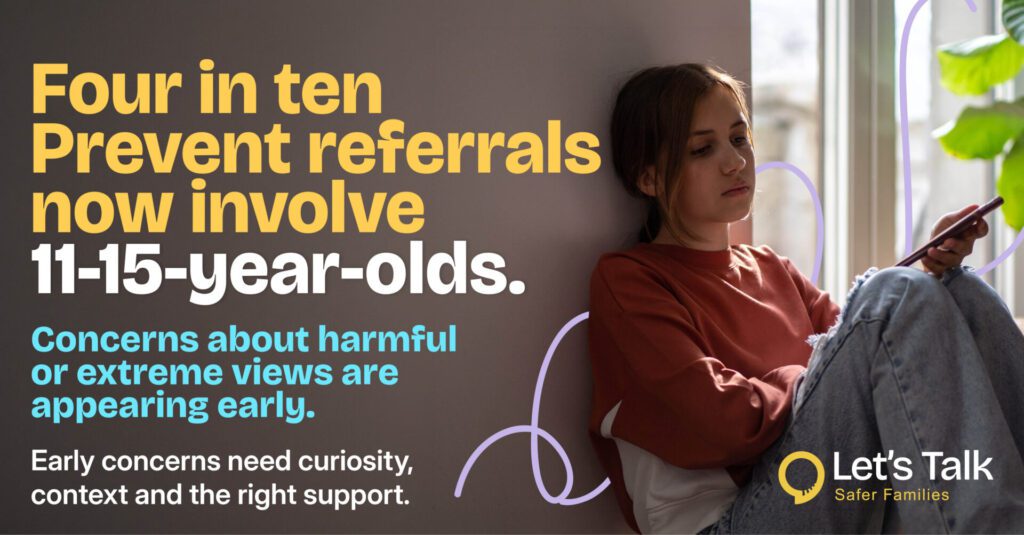
Many teenagers test boundaries and say things to get a reaction. Instead of focusing on one comment, look for a pattern of behaviour.
Possible warning signs include:
- Seeing the world as “us versus them”
- Refusing to consider different opinions
- Using hateful language and calling it “banter”
- Becoming secretive or withdrawing from friends
- Showing hostility towards people who are different from them
These signs do not always mean a young person is being influenced by extremism, but they may be worth exploring further.
What can parents do?
Stay connected
- Stay calm if your child shows you something hateful. “I’m glad you showed me” matters more than a lecture.
- Avoid confiscating devices as a response to honesty, because it teaches children to hide things.
- Talk side by side, in the car or on a walk. Less eye contact feels safer for teenagers.
- Ask “What’s everyone watching at the moment?” rather than “What have you been looking at?”
Stay curious
- Use open questions: “What do you make of that?” or “Who do you think it’s aimed at, and how might they feel?”
- Ask “What’s funny about it?” without sarcasm, then explore who the joke is at the expense of.
- Challenge the idea, not the person. Avoid shock or shaming, which can make hateful content more exciting.
Encourage critical thinking
- Teach a pause routine: Who made this? What do they want from me? Who benefits? What’s missing?
- Treat a strong reaction, such as anger, fear or superiority, as a cue to slow down.
- Look at their feed together and explain how algorithms narrow it.
- Practise safe responses: not engaging, blocking, reporting and screenshotting.
Practical habits help too: phones out of bedrooms overnight, agreed screen-free spaces, and protecting time for offline activities your child enjoys.
Where to get help
If you’re worried someone is being drawn towards extremism, the ACT Early support line on 0800 011 3764 is confidential and open 24 hours a day. A Prevent referral is a safeguarding step, not an accusation, and Channel support is voluntary and confidential.
To report hate:
- Stop Hate UK: 0800 138 1625. Under-18s can call 0808 801 0576.
- True Vision (report-it.org.uk), 101 for non-urgent reports, or 999 in an emergency.
- Report Harmful Content, for help reporting to platforms.
- Childline (0800 1111) and the NSPCC (0808 800 5000), for children and parents.
Serious outcomes are rare, and a child who feels connected and heard is far better protected than one who is simply monitored. Keep talking, and ask for help early if something feels wrong.
Sav and Meena are delivery partners of Let’s Talk Safer Families, they have brought together two distinct expertise – safeguarding young people and prevention of violence against women and girls. Together they run the Teenage Relationship Abuse Project.
We are so proud to be working with them.