
Article: Healthy relationships
Violent adult content:
What parents need to know
Credit – The Teenage Relationship Abuse Project by HOPE/Go-Getta.
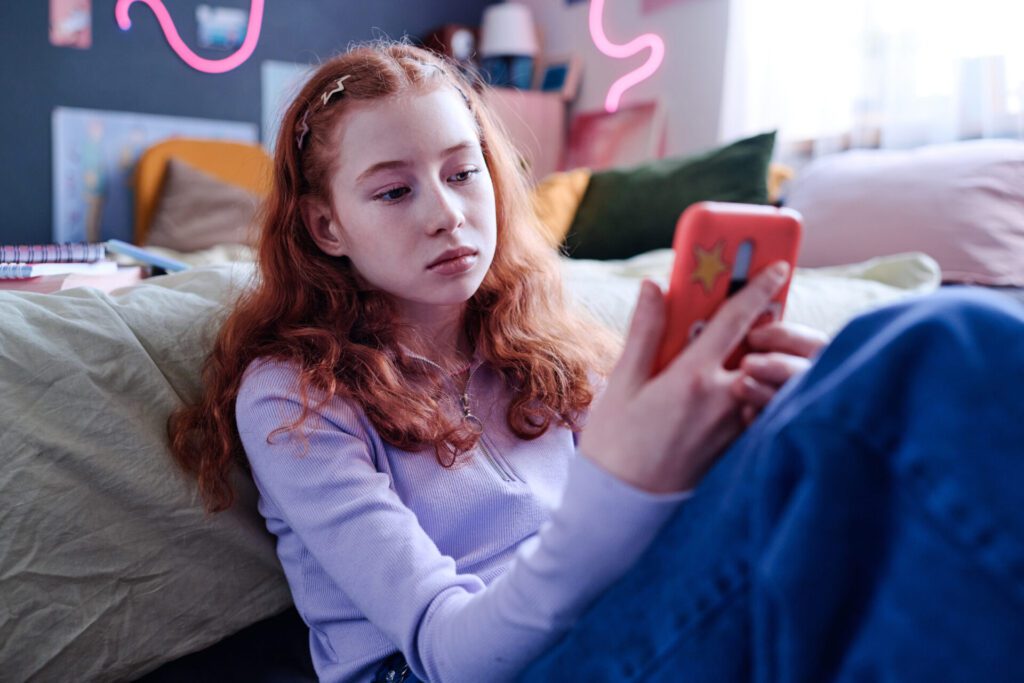
Violent pornography is easy to find. Many young people see violent clips by accident or after a friend shares a link.
You do not need to be a technical expert to talk about this with your child.
Why this matters
Some clips show choking and strangulation as normal parts of sex. Watching the same content again and again shapes what some young people expect from partners.
Non-fatal strangulation is a serious crime. Since 7 June 2022, the maximum sentence has been five years in prison in England and Wales. The law does not require proof of injury.
Signs to watch for
Look for changes over time, not one single moment. Watch for:
- Secrecy about a phone, especially late at night
- Anxiety, withdrawal or low mood after time online
- Treating violence in sex as normal
Start the conversation
Ask what they have seen. Try asking,
“Has anything you saw online upset you?”
This gives them room to answer honestly.
Ask what they think. Try asking,
“What did you think of what you saw?”
Then listen without interrupting.
Say the rule plainly. Real sex involves talking, checking in and stopping when someone says stop. Porn does not show this.
Give one clear promise. Try saying,
“You will not be in trouble for telling me.”
Repeat the promise often. Many young people hide problems because they fear punishment.
Build trust
Tell your child what you will do before a problem arrives. If something upsetting appears, you will work out the next step together. A plan takes away panic in the moment.
Ask your child to show you how to block a website or change privacy settings. Teenagers often know more about apps than their parents do. Asking gives them the lead, and you learn at the same time.
Further support
- Kids Online Safety campaign (GOV.UK): online misogyny, supporting boys against hate
- Action for Children: talking to your child about gender equality
- The Children’s Society: protecting children from misogyny and the manosphere
- BBC Bitesize: parenting resources on the manosphere
- Barnardo’s: research on the impact of online misogyny on young people
- Let’s Talk Safer Families: letstalksaferfamilies.org/further-support
If you’re worried about a young person’s relationship:
- Childline (free, for under-19s): 0800 1111
- National Domestic Abuse Helpline (run by Refuge, free, 24 hours): 0808 2000 247
- In an emergency, call 999