
Article: Exploitation and county lines
If something was really bothering them, would they tell me?
An article by Dr Junior Smart
You don’t have to know everything about your child to be someone they can turn to
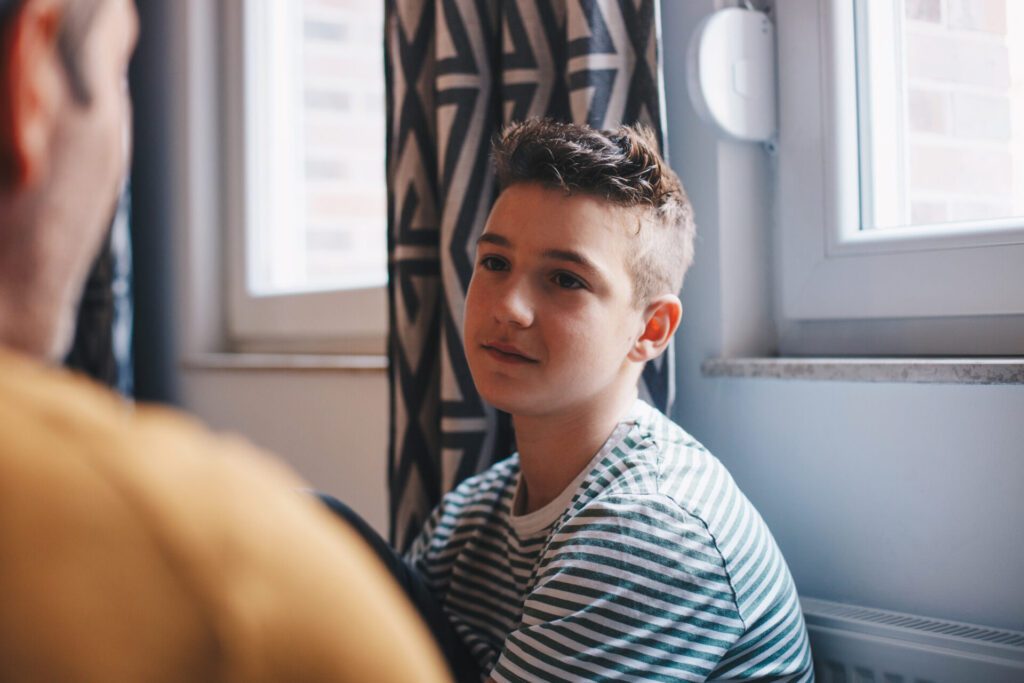
In this article, Dr Junior Smart OBE explains why having a strong relationship with your child can help protect them from criminal exploitation. Drawing on his years of work supporting young people, as well as his own experience of being exploited and spending many years in prison, Junior shares practical advice for parents and carers. His message is clear: you do not need to know everything about your child’s life to make a difference. Being someone they trust and can talk to is what matters most.
Download the PDF or read below.

Whether you’re a parent or a carer, you probably have a sixth sense when it comes to your child.
You know which food they’ll leave on the plate. You know from the way they say your name when they’re about to ask for money. Some days, you can tell from their footsteps on the stairs whether to put the kettle on or give them ten minutes.
Then you ask what happened at school.
“Nothing.”
Six hours, several lessons, a lunch break. Apparently, nothing.
There’s something quite humbling about knowing a child that well and realising how much of their day belongs entirely to them. They have friendships you only hear one side of, jokes that lose something in translation and opinions they’re still trying out. They’re entitled to some of that. But as a parent, it can leave you wondering:
If something was really bothering them, would they tell me?
Over the past 20 years, I’ve worked with young people, and helped organisations develop ways to support them them through challenges such as anti-social behaviour and criminal exploitation.
For my doctorate, I listened to 16 families describe what happened when their child became involved in county lines. My own experience of prison and rebuilding my life has shaped how I listen, too. I know what it means for someone to take you seriously, including when you’ve got
something wrong.
Above all, I come to this as a father. I have three children, one of whom is neurodivergent. I can’t tell you just how much it’s been a humbling journey for me. What works for one can be entirely wrong for another. And none of my children has ever been persuaded by my qualifications. Like many parents, I’m often figuring things out as I go. Sometimes I’m making dinner while someone is calling me from upstairs. Family life is busy.
That’s why advice for parents should fit around real life, not add more pressure.
Think back to when you were young…
Can you remember arguing with an adult when you were younger?
Can you remember the moment you realised they might actually have been right?
More importantly, can you remember how unlikely you were to admit it?
You had already made your point. You had already stormed upstairs. Coming back two minutes later to announce that they had a good argument wasn’t exactly appealing.
Sometimes it took weeks, months, or even years to realise they were right.
It’s worth remembering that feeling when it’s our child on the stairs. What we said may have landed, even if the last thing we heard was a door closing. We can keep the boundary we set and give them a way back into the conversation that doesn’t begin with, “So, do you admit I was right?”
Imagine your child tells you, several days after the argument, that the friendship you were
worried about has become uncomfortable. They might still like this person. They might have
accepted a favour and only now be discovering what’s expected in return. From where you’re
standing, several things suddenly make sense. From where they’re standing, the person
they’re frightened of losing may also be the person they’re frightened to say no to.
That’s one reason I think we ask too much when we expect a child to come to us with the whole story. They may only have enough words for the bit that’s troubling them today. “I don’t want to go, but I said I would” is enough to start with.
Before asking why they agreed, we
might ask, “What do you think would happen if you changed your mind?”
A few things worth trying at home:
- Give the first answer a little room. Suppose they answer with, “well not going will cause
trouble.” It’s tempting to ask who with, what sort of trouble and how long this has been going on,
all in the same breath. Try asking, “What kind of trouble?” Then let them answer. If they’re
searching for the words, a few seconds of quiet can be kinder than another question. - Let them choose how to tell you. Some children talk more easily on a walk, when neither of you has to look straight at the other. Some would rather send a message from the next room. If that’s how your child starts, resist the urge to shout upstairs, “Why are you texting me? I’m right here!” They know. That might be why they can do it.
- Go back if you came in too strongly. “I’ve been thinking about earlier. I was worried and I spoke over you. What were you trying to tell me?” You can apologise for raising your voice and still mean what you said about getting home safely. Your child gets to see that an argument can end and a conversation can carry on.
- Give them permission to choose someone else. A useful question on an ordinary day is, “If
something happened and you couldn’t talk to me, who would you ring?” Let them name the
person. It can sting a little when somebody else gets the call you hoped would come to you. But if
your child has an aunt, a grandparent or another adult they trust enough to ring when they’re
stuck, that’s somebody you want in their corner.
And a word for the parent reading this who has asked, has listened and is still worried.
In my research, I heard from parents who noticed changes early and struggled to get anyone to take their concerns seriously. It’s easy, with hindsight, to ask what a family missed. A fairer question is what happened when that family first asked for help. You’re entitled to seek advice on what you’ve noticed, even
if your child can’t yet explain it.
There will still be days when you ask what happened at school
and get “nothing”.
Sometimes they’re hungry, tired or simply finished with school for the day. Let them have those days too.
Then one evening, perhaps while you’re washing up or just as you’ve decided you’re going to bed, they might appear in the doorway and say, “Can I tell you something?”
Whatever comes after it, there’s a good place to begin.
“Course you can. Where do you want to start?”
Smart Consultancy
Find out more about Dr Junior Smart’s work supporting young people, families and professionals.