
Article: Artificial Intelligence
AI images, deepfakes and sextortion:
What parents need to know
Credit: The Teenage Relationship Abuse Project, HOPE/Go-Getta
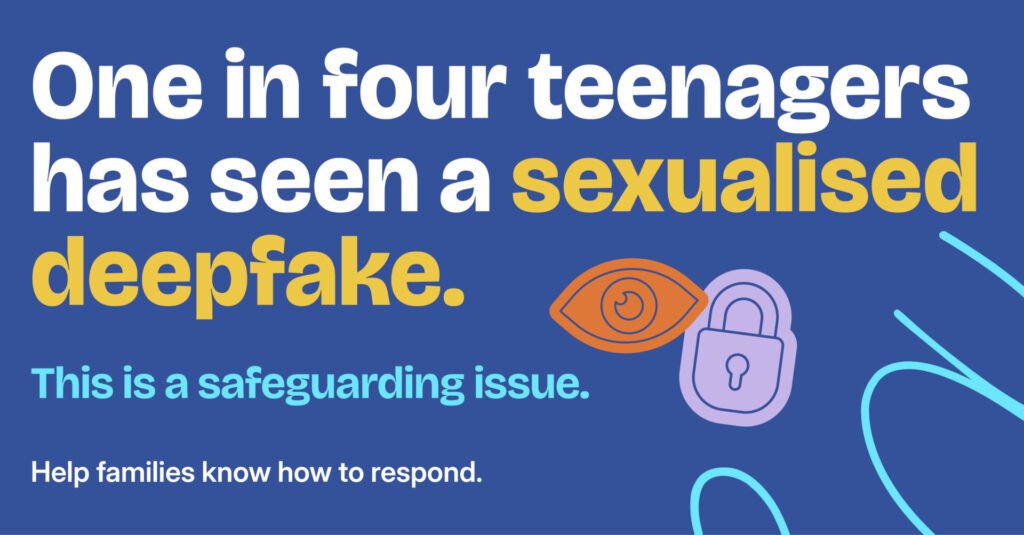
AI now makes fake pictures and videos of real people.
These fakes look real. Criminals use them to hurt young people.
You do not need to be a technical expert to talk to your child about these risks.
Why this matters
AI has made image abuse faster to create. In 2025, the Internet Watch Foundation (IWF) assessed 8,029 AI-generated images and videos of realistic child sexual abuse. The number rose by 14% on the year before. Analysts found 3,440 AI videos in 2025. They found only 13 in 2024.
Teenage boys face a specific risk. Criminals contact young people online and trick them into sending intimate pictures. Then they threaten to share the pictures and demand money. You may have heard this referred to as ‘sextortion.’
In the IWF’s 2025 annual report, 98% of victims in these money-focused cases were boys aged 14 to 17. The IWF has also found children aged 11 to 13 targeted for the first time.
Sharing an intimate image without consent, real or fake, has been illegal since the Online Safety Act. Adults have legal protection too. The law is new, though. Since 6 February 2026, making or asking for a sexual deepfake of an adult without consent is a crime in England and Wales.
Signs to watch for
Look for changes over time, not one single moment. Watch for:
- Secrecy about a phone, especially late at night
- Anxiety, withdrawal or low mood after time online
- A new online contact who asks for photos, moves the chat to another app or sets a deadline
- Talk of being watched, blackmailed or owing someone money
Start the conversation
Ask what they have seen or been sent. Try asking,
“Has anyone sent you a picture you did not ask for?”
This gives them room to answer honestly.
Ask what they would do. Try asking,
“Would you know what to do if someone made a fake picture of you?”
This helps them think about a plan before they need one.
Give one clear promise. Try saying,
“You will not be in trouble for telling me.”
Repeat the promise often. Many young people hide problems because they fear punishment.
Build trust
Tell your child what you will do before a problem arrives. If an image appears, you will work out the next step together. A plan takes away panic in the moment.
Ask your child to show you how to block a contact or change privacy settings. Teenagers often know more about apps than their parents do. Asking gives them the lead, and you learn at the same time.
Treat a child who shared a picture under pressure as a victim. The NSPCC says children should not worry about police involvement when they report. This message matters most when they feel ashamed.
If an image is shared
Stay calm and listen before you ask questions. Do not share, forward or save the image, even as proof.
Anyone under 18 is able to report sexual images or videos of themselves, including AI fakes, through Report Remove on Childline. The IWF reviews each report and works to take down illegal content. Childline counsellors are available on 0800 1111 and by one-to-one chat at childline.org.uk.
If someone demands money, do not pay. Paying rarely stops the threats, and the demands often continue. Keep the messages, but do not forward the image itself.
If an adult in your family is affected, report the image to the police and to the platform where the image appears.
Further support
- Kids Online Safety campaign (GOV.UK): online misogyny, supporting boys against hate
- Action for Children: talking to your child about gender equality
- The Children’s Society: protecting children from misogyny and the manosphere
- BBC Bitesize: parenting resources on the manosphere
- Barnardo’s: research on the impact of online misogyny on young people
- Let’s Talk Safer Families: letstalksaferfamilies.org/further-support
If you’re worried about a young person’s relationship:
- Childline (free, for under-19s): 0800 1111
- National Domestic Abuse Helpline (run by Refuge, free, 24 hours): 0808 2000 247
- In an emergency, call 999